


The Texas Construction News staff writer
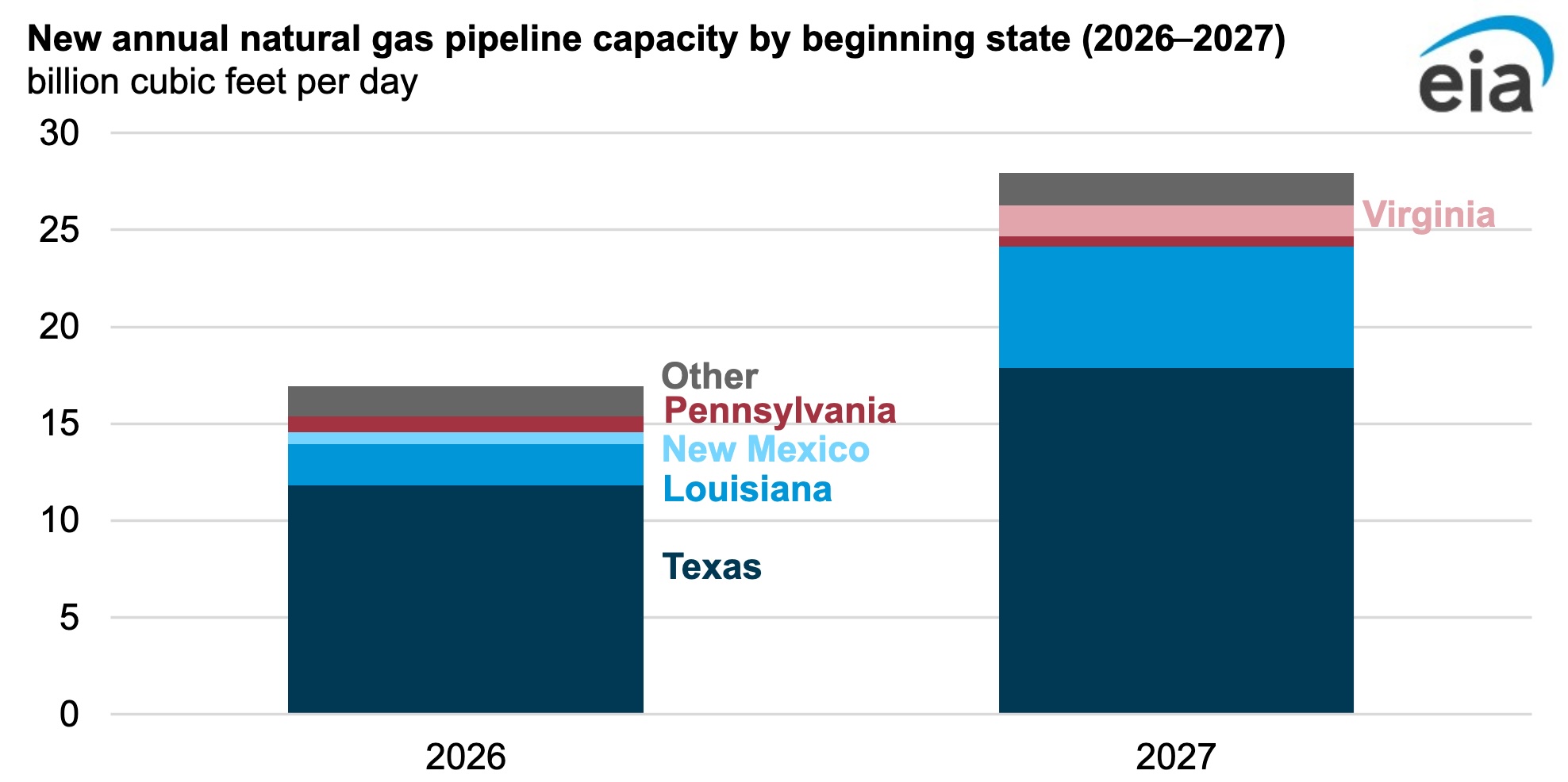
WASHINGTON — More than 66% of the 44.9 billion cubic feet per day (Bcf/d) of new natural gas pipeline capacity planned for the United States in 2026 and 2027 will originate in Texas, according to the U.S. Energy Information Administration’s latest Natural Gas Pipeline Projects Tracker.
Approximately 70% of this new national capacity is already under construction.
The Texas projects are primarily designed to increase takeaway capacity from the prolific Permian Basin. In recent years, a severe lack of pipeline infrastructure has trapped natural gas in the region, causing prices at the Waha Hub in West Texas to frequently plummet below zero. Producers have been forced to pay to have their gas taken away or resort to flaring.
The new capacity will provide critical relief while supplying liquefied natural gas (LNG) export terminals along the Gulf Coast. Notable developments currently underway include:
- Rio Bravo pipeline project: A 138-mile pipeline with up to 4.5 Bcf/d capacity designed to transport gas to the Rio Grande LNG facility.
- Blackcomb pipeline: A 365-mile, 2.5 Bcf/d pipeline slated to enter service in the third quarter of 2026, moving gas from the Permian to South Texas.
- Hugh Brinson pipeline: A 2.2 Bcf/d project expected to begin flowing in late 2026.
Louisiana ranks second nationally, claiming 19% of the planned capacity additions over the next two years, also heavily driven by the booming LNG export market.


