


The Texas Construction News staff writer
HOUSTON — NASA is marking 65 years since the foundation and development of the Lyndon B. Johnson Space Center, tracing a 1,600-acre master-planned research facility that transformed Clear Lake into a major hub of aerospace construction.
An article on NASA’s website describes the history and evolution of the space center.
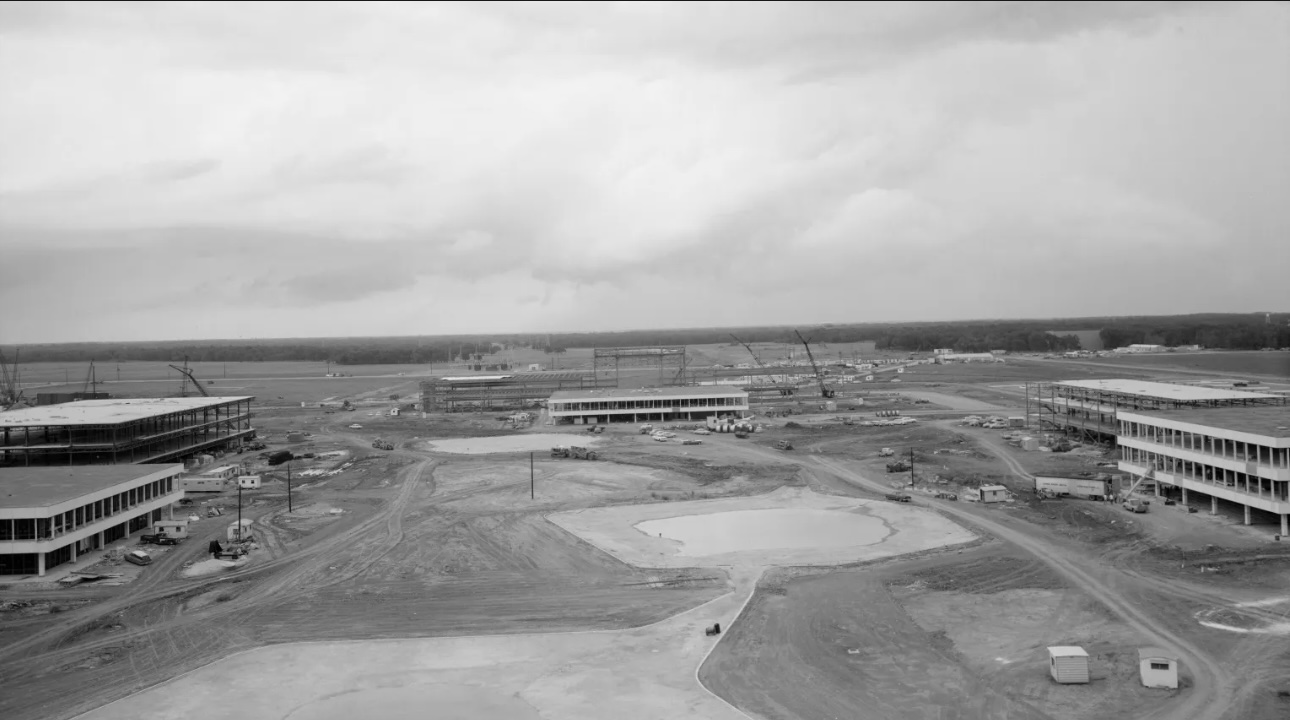
Established in November 1961 as the Manned Spacecraft Center, site groundbreaking commenced in 1962 following a six-month design blitz. The first 18-month construction campaign completed permanent office structures, central facilities, and the nine-story Project Management Building (Building 1) by early 1964.
The campus has continuously renovated and adapted its specialized facility footprint. Building 30—the Christopher C. Kraft Jr. Mission Control Center—has transitioned from supporting early Gemini flights to receiving major structural and technical retrofits for the International Space Station and current Artemis lunar exploration programs.
Recent capital transformations across the federal complex include the demolition of Building 37 and the subsequent dedication of Lunar Receiving Park, alongside recurring electrical, environmental, and communications system modernization projects across its core technical assets.

